Open Projects & Technical Talks 

"OpenSSL in Free Pascal and Lazarus: From openssl 1.1.1 to 3.x-Compatibility, Migration, and Real-World Pitfalls" 
by Željan Rikalo
Placeholder Picture

Summary: A routine operating system update can silently replace OpenSSL libraries, invalidate assumptions made during development, and cause networking, TLS, or certificate validation failures in production applications. This presentation explores how Lazarus and Free Pascal applications interact with OpenSSL, the differences between the OpenSSL support shipped with FPC 3.2.2 and the updated implementation in the FPC trunk, and the challenges developers face when moving from OpenSSL 1.1.1 to OpenSSL 3.x. The talk covers library loading, TLS compatibility, certificate management, deployment practices, troubleshooting techniques, and migration strategies, using practical examples drawn from real Free Pascal projects.

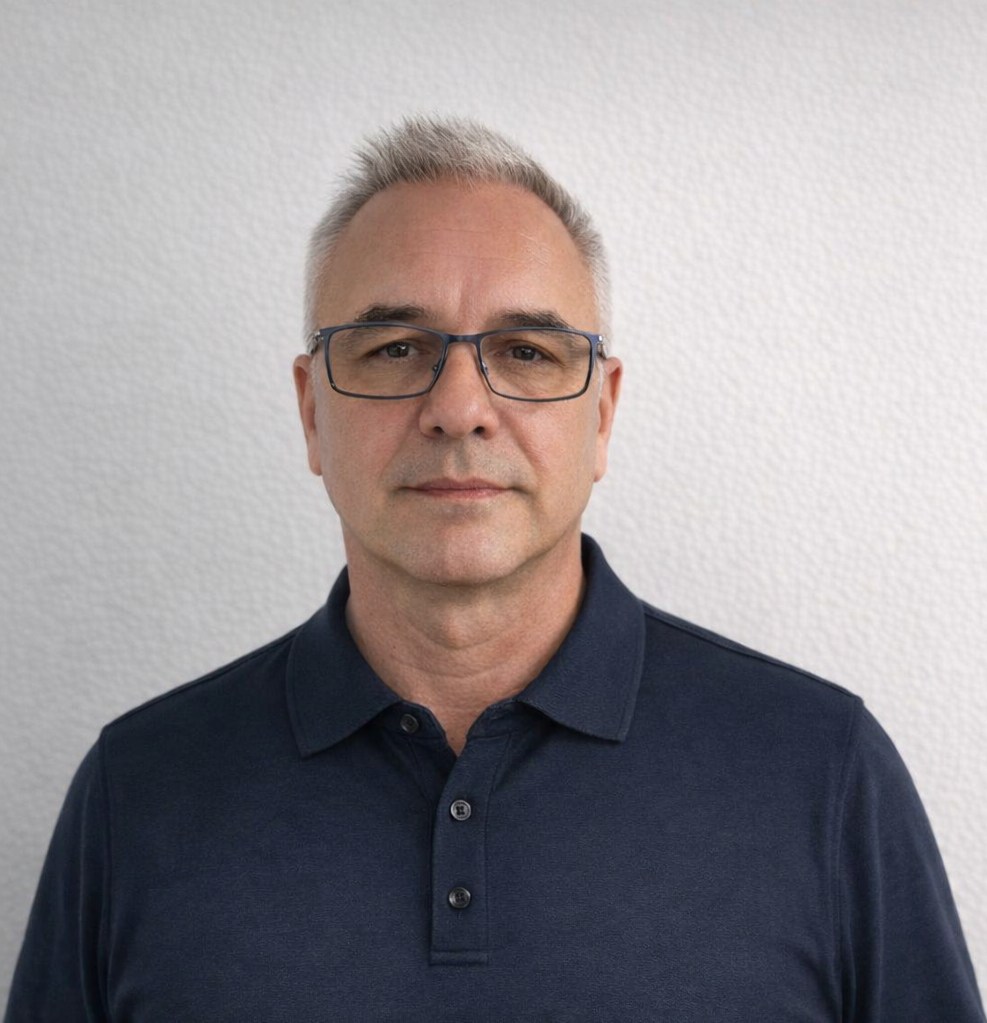
Bio:  Željan Rikalo is a Lazarus core developer who implemented the Qt4, Qt5, and Qt6 widgetsets for Lazarus, enabling cross-platform support for Linux, macOS, Windows, and Amiga (Qt5/Qt6).
He has contributed numerous improvements and fixes to the GTK2 widgetset over the years. In 2012, he created the initial GTK3 widgetset skeleton, and over the past year and a half has worked extensively on updates and improvements that significantly advanced GTK3 support in Lazarus.


  " VCL and the Windows SDKs "
      by Marco Cantù
Placeholder Picture

Summary: The session will explain why Delphi is the best Windows native UI library, by covering the roots of VCL in the Windows API and the Windows SDK, its smooth integration with Windows COM, the Windows App SDK and WinRT support, including MSIX packaging and the WebView 2 control, the available graphic subsystems (from GDI to DirectX and Skia). The session will focus more on the low level foundations than the actual controls available, offering an opportunity to understand how the Windows API and the VCL library interact and how this core was extended over years to offer modern features on top of a solid foundation.


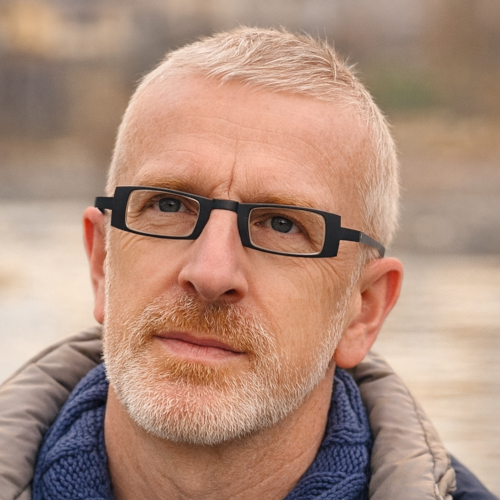
Bio: Marco Cantù holds a master’s degree in information technology from the Polytechnic of Milan, and he is the author of dozens of best-selling books on Delphi and its Object Pascal language. Marco was an independent consultant and developer for 20 years, focused primarily on Pascal and Delphi but also on C++ and JavaScript. Marco was a professional trainer and frequent conference speaker, and he is the author of countless articles on Delphi. Currently, he is the Delphi Product Manager at Embarcadero Technologies, a business unit of Idera, Inc.

  "FastReport Embarcadero Edition:
   Reporting in Delphi Out of the Box"
   by Michael Philippenko
Placeholder Picture

Summary: Many Delphi developers already have FastReport Embarcadero Edition included in their toolbox, but do not always use its full practical potential. In this session, I will show how to create a real report from a dataset using the edition that comes with Delphi and explain where it fits best in everyday development. The talk is focused on a simple, practical workflow and is intended as a useful starting point for developers who want to add reporting to their applications quickly and effectively.


Bio:
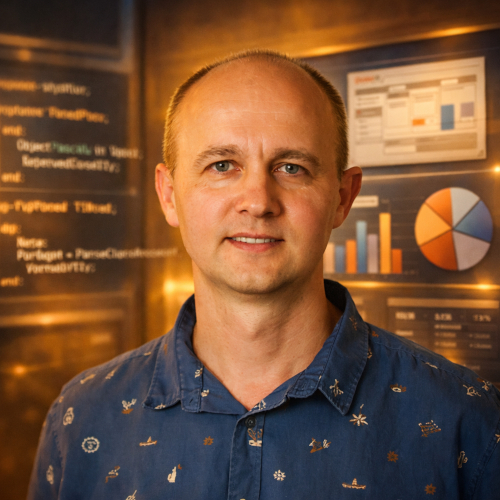
Michael Philippenko is Co-founder and one of the leaders of Fast Reports Inc. since 1998. He has a university degree of the specialty of automated systems of information processing and control, has the qualification for high school teacher, and an enterprise manager ("mini MBA"). He headed the programming department of the College of Com-munications and Informatics of the Rostov city (2016-2019), and he is a member of the Independent Software De-velopers Forum (ISDEF.org).

"What is Design by Contract and what can it do for me?" by Prof. Bertrand Meyer

Placeholder Picture

Summary: Most software today is written without any built-in guarantee of correctness. Such a situation is dangerous, even more so with the advent of AI-based vibe coding, which holds the promise of generating bugs faster than any technology previously known to mankind. One approach to increasing the programmer’s trust in the software he produces is Design by Contract, a discipline of correctness-by-construction closely connected to the principles of object-oriented programming, structured programming and abstract data types, with roots in the work of Dijkstra, Hoare and Wirth. The Design by Contract (DbC) principles encompass the entire software lifecycle, with applications to requirements, design, implementation, mainte-nance and verification/validation, as well as supporting software documentation and project management. They also make it possible to understand the full meaning of such important programming language mechanisms as inheritance (single and multiple) and exception handling. This tutorial presentation will introduce the key DbC concepts (the use of mechanisms such as preconditions, postconditions, class invariants, loop invariants and loop variants) and cover their principal applications. It will rely on Eiffel, the “mother tongue” of Design by Contract, but will also hint at usage in other environments such as Object Pascal.


"Leveraging the Object in Object Pascal: Implementing a Manageable Architecture in Delphi" by Cary Janson

Placeholder Picture

Summary: Using a combination of inheritance, interposer classes, and interfaces, you can implement an architecture that greatly improves your ability to easily make changes across a wide range of forms and components. This presentation begins by showing you how to create TForm descendants that make future changes easy. It then continues by discussing how to create custom TComponent descendants that permit you to easily update the appearance and behavior of your software across a wide range of implementa-tions with the addition of a small amount of code.

Bio:  Cary Jensen is Chief Technology Officer of Jensen Data Systems, Inc. Since 1988 he has built and deployed database applications in a wide range of industries. Dr. Jensen is an Embarcadero MVP, a Spirit of Delphi recipient, and a best-selling author of more than 30 books on computer software (including Delphi in Depth: FireDAC) and more than 100 magazine articles. He is a popular speaker at Delphi conferences and workshops around the world, was the author of, and principal speaker, on the original 1995 Delphi World Tour, and is the co-founder of Delphi Developer Days, one of the many multi-day seminar series that he has written and taught. He holds a Ph.D. in Engineering Psychology, specializing in human-computer interaction. In addition, Dr. Jensen is an Adjunct Professor in the Human/Com-puter Interaction group in the Department of Psychological Sciences at Rice University, one of the United States’ leading research institutions


??????????????????????

Placeholder Picture

                                       ???????
                                 ??                 ??
                                                       ??
                                                   ??
                                           ????
                                         ??
                                        ??
                                        ??
                                        ??

                                        ??

Social Icon Social Icon

International Pascal Congress® is a registered trademark.