Plenary Talks 2026

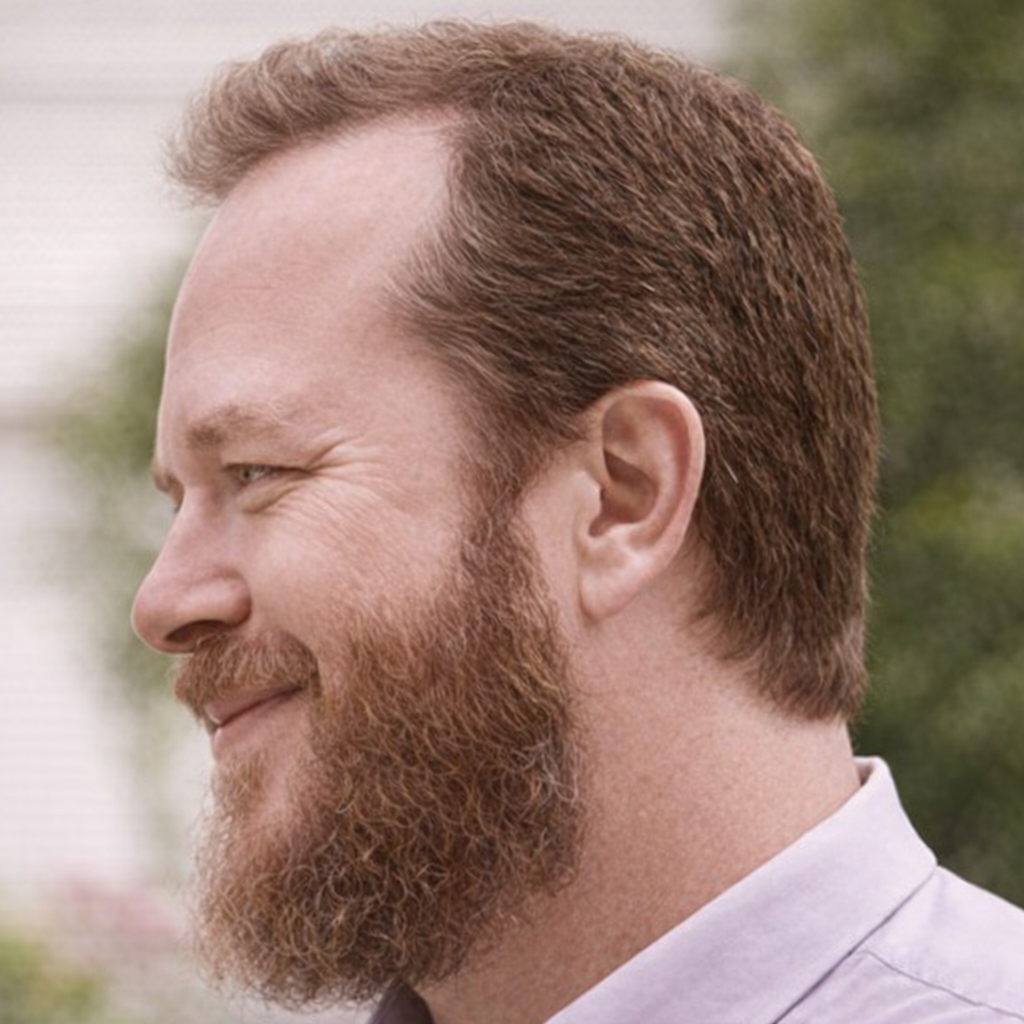
"Wirth and Pascal: a personal perspective and recollection" by Prof. Bertrand Meyer
Placeholder Picture

Summary: Throughout my work on programming methodology and programming languages I have studied, enjoyed and applied the insights of Niklaus Wirth’s work. After taking up the succession of his chair at ETH Zurich in 2001 I had the privilege of befriending him and frequently interacting with him over the following two decades. In this talk I will reflect on the lessons of that interaction, both intellectual and personal, and try to draw a portrait of both Wirth the scientist and Klaus the man. The talk will focus on his contributions to the many fields of computer science in which he innovated. It will discuss them and assess their continued relevance to the evolution of the field.

Bio: Bertrand Meyer  is Professor Emeritus at ETH Zurich and CTO of Eiffel Software. His awards include the ACM Software System Award, the IEEE Harlan Mills award, ACM and IFIP fellow, member of Academia Europaea and the French National Academy of Technologies, and two honorary doctorates. He was one of the pioneers in object technology through his introduction of the Design by Contract and other well-known software design concepts such as the Open-Closed Principle, and best-selling books such as Object-Oriented Software Construction. He has made important contributions to programming languages, through his design of the Eiffel language, agile methods, requirements engineering, formal methods, concurrent programming, and software project management. 
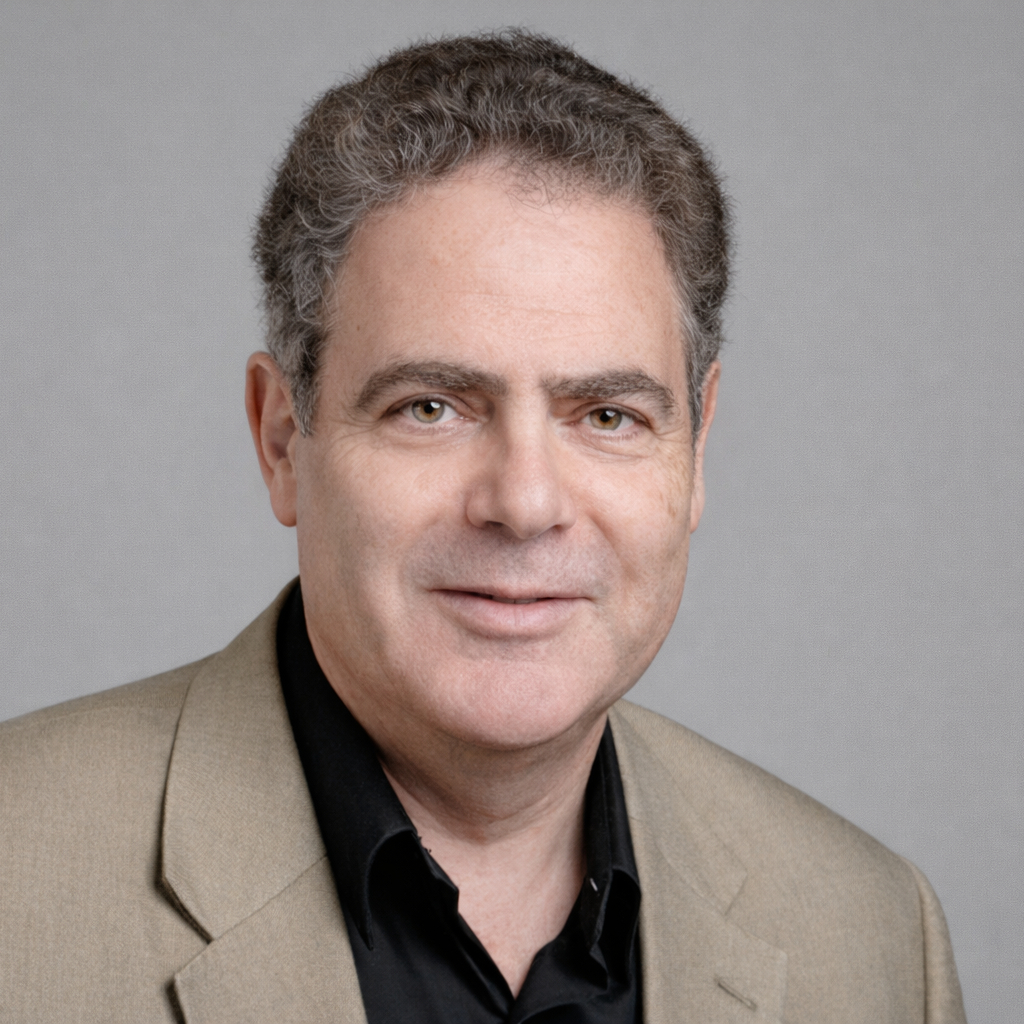
"Delphi? Silently Successful!"
by Marco Cantù

Placeholder Picture

Summary: This pleanary talk will cover what has made Delphi such a successful language and tool over time analyzing some of its distinctive foundations, how Delphi is impacting the industry (even if not very visibly) touching on some great use cases,  what Embarcadero has been doing recently to move the product in the right directions (Arm, Web development with Web Stencils, FMX enhancements, VCL continuous development...), and how AI is impacting the industry in general and the Delphi ecosystem in particular.


Bio: Marco Cantù holds a master’s degree in information technology from the Polytechnic of Milan, and he is the author of dozens of best-selling books on Delphi and its Object Pascal language. Marco was an independent consultant and developer for 20 years, focused primarily on Pascal and Delphi but also on C++ and JavaScript. Marco was a professional trainer and frequent conference speaker, and he is the author of countless articles on Delphi. Currently, he is the Delphi Product Manager at Embarcadero Technologies, a business unit of Idera, Inc.

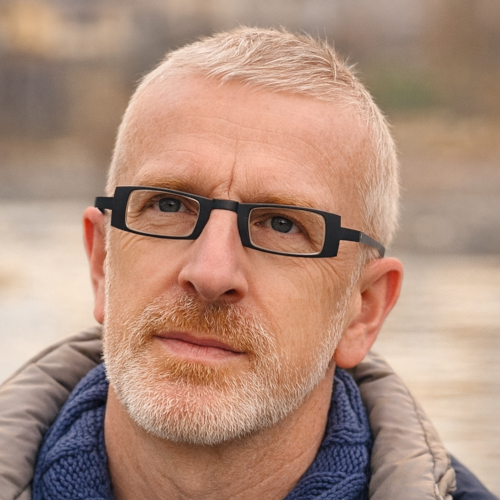
"Native Pascal in Industry 4.0: Building the Definitive Bridge Between OT and IT" by Dr. Eduardo Balvis Outeiriño

Placeholder Picture

Summary: As the industrial world digitizes, the demand for robust, high-performance control software is skyrocketing. Pascal's philosophy is echoed in the industrial standard ST (Structured Text)—the "Pascal of PLCs"—proving its natural suitability for this task. This talk champions the Pascal ecosystem (Delphi/Lazarus) as the ideal platform for building custom HMI/SCADA solutions from scratch. We will explore architectures for implementing native communication with key protocols such as Modbus TCP, S7, and Ethernet/IP. In turn, we will see how to integrate this data with IIoT and enterprise platforms using MQTT and OPC UA. Discover why Pascal offers a competitive advantage in bridging the worlds of OT and IT with unmatched performance and control.


Bio
: Dr. Eduardo Balvis Outeiriño obtained his PhD in Lasers, Photonics and Vision, and is an Industrial Engineer specializing in Automation and Electronics. He has more than 20 years of experience as CEO of a company dedicated to industrial automation. He is an associate professor at the University of Vigo and an expert in Pascal programming, SCADA system design and industrial communication protocols. He has led innovative projects in IoT and advanced automation, integrating solutions for Industry 4.0        

"Using pascal interfaces for bi-directional mORMot services" by Arnaud Bouchez

Placeholder Picture

Summary: Modern pascal language features the "interface" keyword to define an abstract set of methods and properties. From "interface" comes clean abstraction, up to the famous SOLID principles. The mORMot library can implement those calls using JSON over HTTP or HTTPS, to define a set of services. It is in fact the only RPC/REST library in any language to allow "interface" parameters as a client-to-server callbacks, transparently over WebSockets. In this session, we will show how convenient the "interface" language construct is convenient on both client and server side to define not only a local contract, e.g. for dependency injection or testing, but also a remote contract, for services or micro-services. In fact, the whole purpose of the mORMot Open Source library was to leverage modern pascal "interface" abstraction into modern clean micro-services architectures.

Bio:   Arnaud Bouchez is the original author and maintainer of the mORMot framework since 2010. He has designed it from the ground up to bring enterprise-grade SOA, ORM, and high-performance server programming to the Pascal world. Arnaud regularly speaks at Pascal conferences, is an Embarcadero MVP, and helps thousands of developers worldwide build robust back-ends with mORMot. He lives with the marmots in the French Pyrenees, and works as senior developer at the French Tranquil IT company.

"Pascal and Supercomputing: A plausible marriage today?" by Dr. Javier Cuenca Muñoz

Placeholder Picture

Summary: High Performance Computing (HPC) has emerged as a fundamental pillar for scientific advancement and global economic competitiveness, transforming research methodologies across diverse domains including academic research, aerospace industry, pharmaceuticals, and financial services. This evolution has been driven by the proliferation of multi-core processors, specialized architectures, and accelerators such as Graphics Processing Units (GPUs), which collectively enable unprecedented computational capabilities. The work described in this talk aims to evaluate and extend HPC support in Delphi-Pascal, providing a methodology that facilitate access to these techniques by developers with different levels of experience in this field.

Bio: Javier Cuenca received the Engineering and Doctoral degrees, both in Computer Science, from University of Murcia (UMU), Spain, in 1994 and 2004, respectively. Since June 2013, he has been the Principal Investigator of the Scientific Computing and Parallel Programming Research Group at UMU. In this Group, he has supervised three PhD theses and about thirty bachelor’s and master’s theses.

"Pascal and Databases: A Winning Combination" by Olaf Monien

Placeholder Picture

Summary: Modern Delphi development offers an exceptionally strong ecosystem for building database-driven applications. The talk highlights how the language, its type of system, and its component-based architecture provide a clean and maintainable way to access relational and non-relational data. Real-world examples demonstrate how FireDAC and Delphi’s multi-tier technologies simplify robust, high-performance data access. We also explore how modern compiler features and cross-platform support make Delphi a competitive and efficient choice for today’s data-intensive applications.


Bio:
Olaf Monien has been a long-standing Embarcadero MVP and serves as the coordinator for the German-speaking region. With over 25 years of experience in the IT industry, he is a recognized expert in software architecture and database design, holding a Master's degree in Computer Science with a minor in Business Studies. His extensive experience spans industrial, banking, SaaS, and medical/pharmaceutical sectors, providing him with a comprehensive perspective on IT consultancy.

"Modern cryptography with Pascal" by  Markus Humm

Placeholder Picture

Summary: This plenary talk will focus on cryptography and why modern cryptography is more than just encrypting and decrypting data. Different aims of cryptographic methods are described along with some relevant algorithms. We will also compare a few of the available libraries for Pascal and shed some light on their properties. Further we'll take a short look at quantum computing and why this is relevant for cryptography.


Bio
: Markus Humm has been Embarcadero MVP since 2024. He studied for a degree in commercial information technology. After finishing his studies, he worked on developing SAP applications until 2004 when he got a position in Ebm-papst Group in Research & Development electronics. In January 2016 he became involved with the Delphi Encryption Compendium project. In December 2020 he released version 6.0. Since then, he has been working on further bugfixes and has already added several new algorithms and improvements to DEC.

Social Icon Social Icon

International Pascal Congress® is a registered trademark.